A workbench is the one thing in a garage you interact with standing up for hours, which makes it the one purchase where ergonomics beat specification. Most people buy on capacity and regret the height.
Start with height, because it is the number you cannot change on most benches. The general-purpose figure for a standing work surface is 34 to 36 inches, which puts the top a little below the wrist of an average-height adult with arms relaxed — the position your forearms want for sawing, filing, assembling and general fettling. Precision work done seated or leaning close wants to be higher, around 38 to 42 inches, so your eyes are near the work without your back rounding. Heavy work where you are pushing down — planing, breaking bolts loose, hammering — wants to be lower, nearer 30 to 32 inches, so you can get your bodyweight over it rather than pressing with your arms alone.
That range is why an adjustable bench is worth more than it looks. Seville Classics' UltraHD adjusts from 28.5 to 42 inches in 1 inch increments, which covers all three cases in one bench, and publishes a 2,000 lb capacity on a 60 by 24 inch top with a 1.5 inch solid wood surface. A fixed bench forces you to pick one job to be comfortable at.
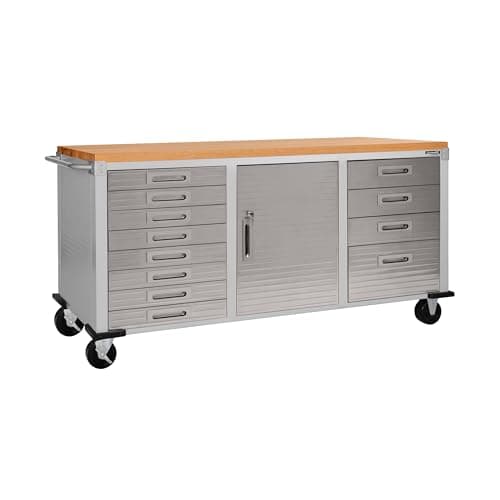
Capacity matters less than people assume, and top thickness matters more. Almost nothing a home garage does will trouble a 2,000 lb rated frame — that number is about the frame not sagging, and any credible steel bench clears it. What you notice daily is the top. A 1.5 inch solid wood top absorbs hammer blows, can be clamped through, takes a vise bolted to it, and can be sanded flat again after a decade of abuse. A thin laminate or MDF top dishes where you work, delaminates the first time something wet sits on it, and cannot be resurfaced. If you are comparing two benches at the same price, the thicker top is almost always the better buy.
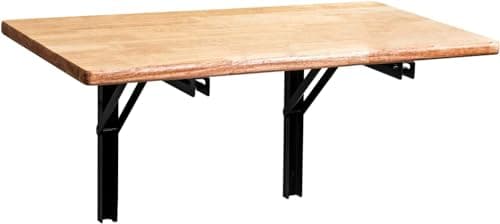
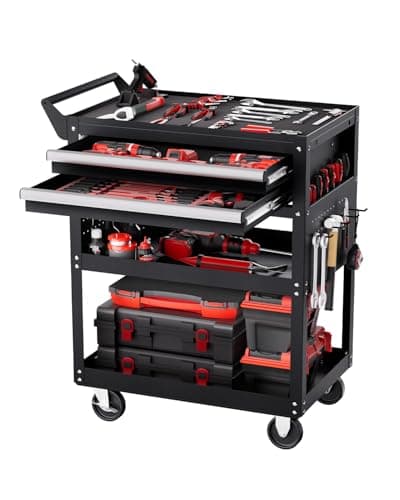
Drawers or open frame is a real fork. An open-frame bench is cheaper, lighter, and leaves room to slide a rolling tool chest or a shop vac underneath — which is genuinely more flexible if you already own the storage. A bench with drawers puts the tools you use at the surface you use them on, which is the single biggest reduction in wasted movement available in a garage. The failure mode of an open-frame bench is predictable: the top fills with the tools that have nowhere else to live, and then you have no bench.
A vise is not optional and is almost never included. Whatever you buy, plan for bolting a vise to it — which means checking that the top is thick enough to take the bolts and that the frame runs under the corner where the vise will go. A vise hanging off an unsupported overhang will flex the top every time you use it.
On the build-versus-buy question. A 2x4 and plywood bench built to your own height, with a doubled ply top, will outperform most bought benches under $400 and costs a fraction of one. What you give up is adjustability, mobility, and a weekend. The honest answer is that if you have a saw and the weekend, building is the better outcome; if you do not, a bought bench you actually have this month beats a project you will start in spring.
Store brands, again. Husky's adjustable bench at Home Depot is frequently the cheapest adjustable-height bench with a solid top in the country. We cannot link it and we earn nothing on it. It belongs in your comparison regardless.
Below: the roundup, the drawers-versus-open comparison, the height reference, the top-materials guide, and the build-versus-buy breakdown.