Slatwall vs pegboard vs French cleat
Three ways to hang things on a garage wall. One table that finally puts them side by side.
#ad We earn a commission if you buy through this link, at no extra cost to you. How this site is funded. Prices last checked October 17, 2026.
Quick picks
Ranked on published load rating normalized into a common unit, then on how much the manufacturer tells you about what that rating assumes. Tap any row for the full write-up.
| # | Product | Best for | Published rating | Buy |
|---|---|---|---|---|
| 1 | 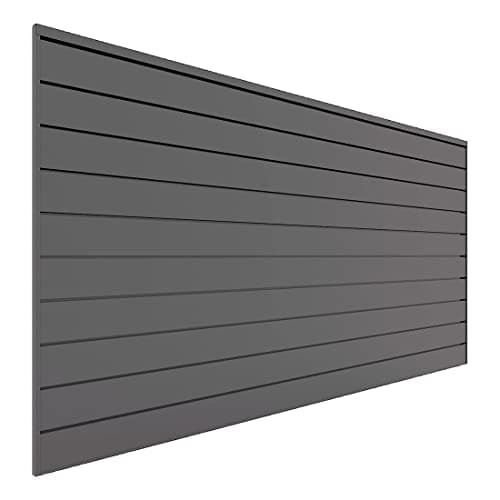 If you choose slatwall Proslat PVC Slatwall Panels Publishes its fastener and stud spacing, unlike most of the category. | A full wall done once, on a normal stud-framed garage | 75 lb / sq ftInstall doc | |
| 2 | 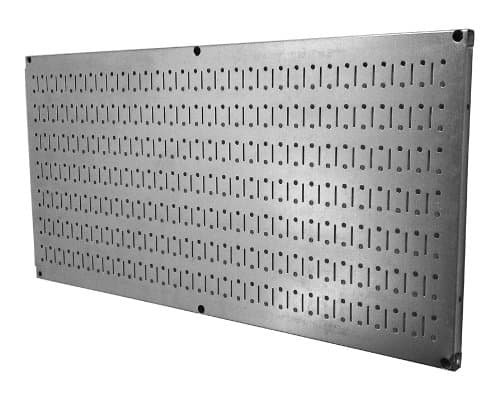 If you choose pegboard Wall Control 16in x 32in Metal Pegboard Panel Steel, 20-gauge, and the best-documented product in the category. | Hand tools you want to rearrange often, on any wall | 200 lb / panelInstall doc |
#ad We earn a commission if you buy through this link, at no extra cost to you. How this site is funded. Prices last checked October 17, 2026.
This exact three-way question shows up in Google’s autocomplete and nobody answers all three in one place. Usually because the site answering it sells one of them.
Capacity figures are the manufacturers' published ratings; cost and time figures are ranges, not quotes. Nothing here is a measurement we took.
| Slatwall | Pegboard (metal) | French cleat | |
|---|---|---|---|
| Published capacity | 50–300 lb/sq ft | ~56 lb/sq ft normalized | Not rated — set by cleat + fastener |
| Relative cost per sq ft | Highest | Middle | Lowest |
| Hook placement | Anywhere along the groove | Fixed hole grid | Anywhere you cut a cleat for |
| Accessory lock-in | High — profiles differ by brand | Low — standard 1″ grid is common | None — you make them |
| Moisture behavior | PVC is unaffected | Steel, powder-coated; can rust if scratched | Plywood swells if unsealed |
| Install effort, one wall | Half a day | An hour or two | A weekend, plus a saw |
| Changing it later | Buy more accessories | Buy more hooks | Cut another cleat |
Slatwall: what you are paying for
The continuous groove. On pegboard, a hook goes where a hole is; on slatwall it goes anywhere along the horizontal run. That sounds minor until you are hanging things of awkward and varied width, which is precisely what a garage is full of.
The second thing you are paying for is capacity headroom, if you buy the right panel. storeWALL Heavy Duty publishes 300 lb per square foot at the panel face; Proslat ProCore publishes 200. Nothing in pegboard comes near that. The catch, covered in full on the capacity page, is that most slatwall ratings are published without a load distance, so on brackets the real figure is materially lower than the headline.
What you are also buying, whether you want to or not, is accessory lock-in. Slot profiles are not standardized across brands. The hooks, baskets and shelves you buy are tied to the panel system you chose, and switching later means replacing both.
Pegboard: cheaper, and better documented
Metal pegboard is the value answer and, in one specific case, the most transparent product in this whole category. Wall Control publishes 200 lb per 16×32 inch panel into studs and 100 lb into drywall anchors, per-hook limits of 10–15 lb (two-slot) and 5–10 lb (single-slot), per-shelf and per-bin limits, a 20-gauge steel spec, and a plain-English statement of what all of it assumes.
Normalized, that 200 lb per panel is about 56 lb per square foot — mid-pack against slatwall rather than embarrassing. And the per-hook limit is the number that actually binds in most garages regardless of which system you buy.
French cleat: cheapest, strongest for the money, most work
A French cleat wall is strips of plywood ripped at 45 degrees and screwed to the studs, with matching strips on the back of whatever you hang. It costs a fraction of any commercial system, and because the load path runs straight into a stud through a wide bearing surface, it will carry more weight per dollar than anything else here.
It has no published rating, because it is not a product — capacity is set by the plywood thickness, the screws and the studs, which means it is genuinely on you. It also has zero accessory lock-in, which is its quiet superpower: when your tool collection changes, you cut a new holder from offcuts instead of buying one.
The cost is a weekend and a saw. If you do not own a circular saw or a table saw and are not going to buy one, this option is not actually available to you at the price it looks like.
How to choose, honestly
- You want a finished, uniform wall and will pay for it
- You are hanging awkward widths and want hook placement freedom
- You need published capacity above 100 lb/sq ft
- The garage is humid and you want PVC that ignores it
- Budget is the constraint — pegboard does 80% of the job for less
- You want per-hook figures you can actually plan around (Wall Control)
- Your tool collection changes often — cleats adapt for free
- You own a saw and would rather spend a weekend than the money
The answer most garages land on is a mix: a run of slatwall or pegboard above the bench where placement freedom matters, and cleats or plain shelving everywhere else. Nothing obliges you to pick one system for the whole room, and the pages that assume you must are usually selling one.
There is a fourth contender this page leaves out on purpose: wire gridwall, the retail-display panel. It is cheaper than any of the three above and it is the only one that lets a hook sit directly above another hook, but not one gridwall panel or hook we can find publishes a weight rating at all, so it could not be ranked on the test this page uses. The case for and against it is set out in slatwall vs gridwall.
If the cleat column is the one you keep coming back to, the build spec, the fixing rules and the honest problem with its missing load rating are in French cleat garage storage.
Common questions
Is slatwall or pegboard better for tools?
Is a French cleat wall stronger than slatwall?
Can I use pegboard hooks on slatwall?
Which is cheapest for a whole garage wall?
Sources
- Wall Control pegboard how-to — panel, hook, shelf and bin limits
- Proslat FAQ — PVC and ProCore ratings and fastener specification
- storeWALL Heavy Duty — 300 lb at surface, 165 lb at 4 inches
Figures were read on the dates shown against each source. If one has changed, or if we have got something wrong, tell us and we will correct the page.
Read next
- SlatwallHow much weight can slatwall actually hold?The full cross-brand load table, normalized into one unit, with what each rating assumes stated beside it.
- SlatwallThe best garage wall systemsNine wall systems ranked on normalized load rating and on how honestly each manufacturer documents it.
- SlatwallSlatwall accessories and compatibilityCross-brand compatibility, why pegboard hooks do not fit, and the per-hook limits that decide real capacity.
- SlatwallSlatwall vs gridwallWire grid against slotted panel on the only question that matters in a garage: which one publishes what it holds.
- SlatwallRubbermaid FastTrackA 1,750 lb rail rating and 50 lb hooks. Which figure decides what you can hang, and how it compares to slatwall.
- Planning & installFrench cleat garage storageHow a cleat wall carries load, what it costs, and the published-rating problem nobody mentions.
- SlatwallGladiator GearTrack vs Rubbermaid FastTrackThe two garage track systems compared by the hook, since the rail ratings are in units that cannot be compared directly.
- SlatwallBest pegboard for a garageMetal, polypropylene and hardboard pegboard ranked on the published figure, including the one that publishes none.