Garage workbench dimensions
Depth decides whether the bench is usable. Width decides whether it fits. Both are published; almost nobody compares them.
#ad We earn a commission if you buy through this link, at no extra cost to you. How this site is funded. Prices last checked October 23, 2026.
Quick picks
One bench per size class, chosen because its published dimensions are the figures quoted above - so you can check each one against your own wall before you buy.
| # | Product | Best for | Published rating | Buy |
|---|---|---|---|---|
| 1 | 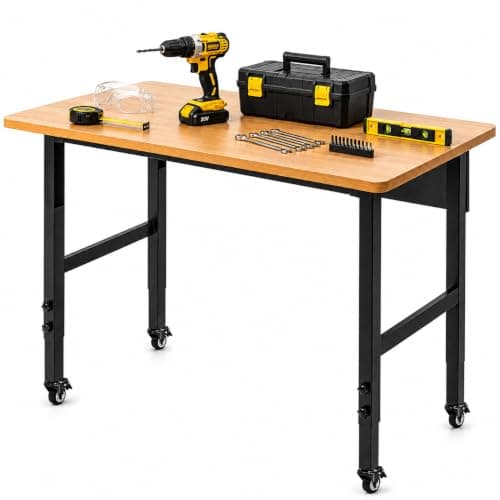 The single-bay size: 48 x 24 Spanspace 48" Rolling Workbench 48" x 24" top, 30" to 40" in five steps - full depth in a 48 inch width. | A cheap, height-adjustable rolling surface for light-to-medium work | 2,000 lb totalRetailer listing | |
| 2 | No photo The reference size: 60 x 24 Seville Classics UltraHD Adjustable Height Workbench 60" W x 24" D, and height adjustable 28.5" to 42" in 1 inch steps. | One bench that has to suit both seated and standing work | 2,000 lb totalManufacturer | |
| 3 | 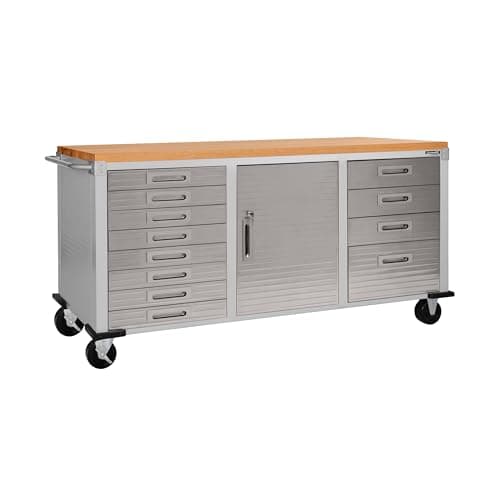 The long one: 72 inches Seville Classics UltraHD 12-Drawer Rolling Workbench 72" W (77" with push bars) x 20" D x 37.5" H, fixed height. | A rolling bench that is also the tool chest, with a figure you can plan against | 500 lb totalRetailer listing | |
| 4 | 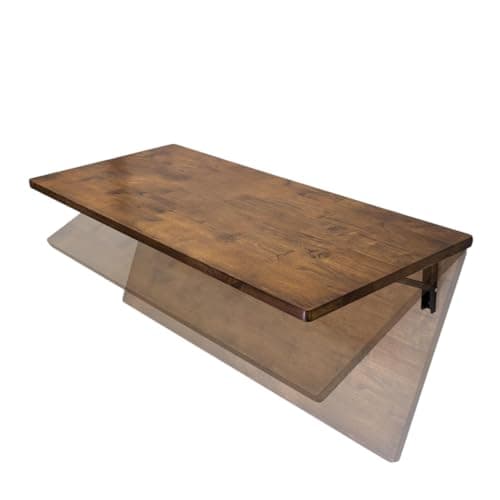 The narrow wall: 40 x 18 StoreYourBoard Folding Workbench 40" x 18" on a 22 mm butcher block top, folding flat to the wall. | A folding bench whose top is specified, not just its brackets | 200 lb totalRetailer listing | |
| 5 | 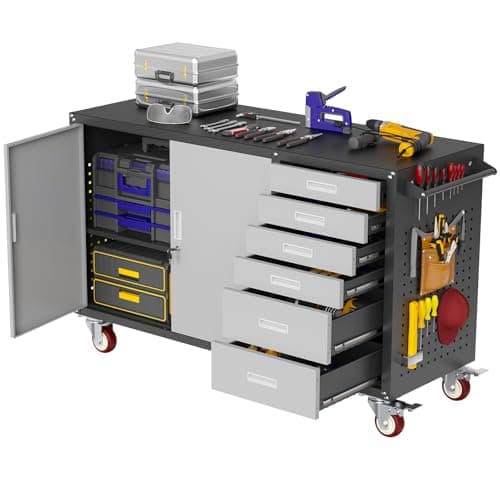 Deepest storage in the width Eltean 55" Rolling Workbench with Drawers 55" W x 19.7" D x 37.5" H, with six drawers under the top. | A bench that doubles as the tool storage and moves with you | 1,000 lb totalRetailer listing |
#ad We earn a commission if you buy through this link, at no extra cost to you. How this site is funded. Prices last checked October 23, 2026.
Workbench listings lead with capacity, because 2,000 lb is a better headline than 24 inches. It is also the least useful number on the box: almost every bench in this category claims more capacity than anything you will ever put on it, and none of them tells you whether the claim holds on its own casters. The two numbers that decide whether you are happy with a bench a year later are its depth and its width, and those are published, comparable and almost never compared.
The twelve benches, by published footprint
Published figures only, each already sourced in this registry. Where a listing publishes a height range rather than a height, the range is given — that is the adjustable bench's whole argument. Blank cells are listings that publish no depth, which is a finding and not a gap in the research.
| Bench | Width | Depth | Height | Type |
|---|---|---|---|---|
| Seville Classics UltraHD adjustable | 60″ | 24″ | 28.5–42″ | Adjustable |
| Gladiator adjustable, 4 ft | 48″ | 25″ | 27.5–40.8″ | Adjustable |
| Spanspace rolling, 48 in. | 48″ | 24″ | 30–40″ | Rolling |
| VEVOR adjustable, 60 in. | 60″ | 22″ | 28–39.5″ | Adjustable |
| AMZSTAN mobile, folding | 47.2″ | 23.6″ | 59″ overall | Rolling, pegboard |
| TORACK folding | 47.25″ | 22.75″ | Not published | Wall folding |
| Eltean rolling, 55 in. | 55″ | 19.7″ | 37.5″ | Rolling, 6 drawers |
| Seville UltraHD 12-drawer | 72″ | 20″ | 37.5″ | Rolling cabinet |
| StoreYourBoard folding | 40″ | 18″ | Not published | Wall folding |
| Ultrawall folding | 47.2″ | Not published — folded depth under 4 in. | Not published | Wall folding |
| Wallmaster folding | 32″ | 18″ | Not published | Wall folding |
| Seville UltraGraphite, 48 in. | 48″ | Not published | Not published | Rolling |
Three things fall straight out of that table. The depth range across the whole category is only seven inches, 18 to 25, which is narrow enough that every inch of it counts. The deepest benches are the fixed and adjustable open-frame ones; the shallowest are the drawer units and the wall-folding boards, where the storage or the fold eats the depth. And two of twelve listings publish no depth at all, on the dimension that most decides whether the bench is pleasant to work at.
Depth: 24 inches is the number that matters
24inches deep
The depth that takes a mitre saw front to back with the fence clear, holds a full sheet of letter paper beside a tool, and still lets you reach the back of the bench without leaning on what you are working on. 18 inches does none of those.
Depth is the dimension people get wrong, because in a showroom every bench looks deep enough and in a garage none of them does. The practical thresholds are these.
18 inches is a shelf you can work at, not a bench. It suits a wall-folding board for occasional jobs, and it is the right choice when the alternative is no bench at all — but a mitre saw, a bench grinder or a vice with anything clamped in it will overhang the front edge. Everything you set down lands in the work.
20 to 22 inches is the drawer-unit compromise. It is enough for hand work, assembly and most repairs, and it is what you get when the bench is also the tool chest — the Eltean publishes 19.7 inches and the Seville 12-drawer 20, both because the drawer box sets the depth. If the bench is primarily storage with a worktop on it, this is the honest size.
24 to 25 inches is a real workbench. A mitre saw sits front to back with its fence clear, a power tool can rest behind the work instead of beside it, and you can reach the back of the bench without putting a hand on what you are doing. Both of the adjustable benches that publish a depth are in this band, at 24 and 25 inches, which is not a coincidence: these are the benches designed to be worked at rather than stored under.
Width: what each size class actually fits
Width is the easier decision because the constraint is usually the wall rather than the work. The published widths cluster into four classes.
Width classes as the published figures actually fall, not as round numbers. The last column is the wall run the bench needs including a hand's width at each end — a bench wedged exactly into its own width is a bench you cannot clamp to.
| Width class | Published examples | What it fits | Wall it needs |
|---|---|---|---|
| 32–40″ | Wallmaster 32″, StoreYourBoard 40″ | One job at a time; a repair, not a project | ~44″ |
| 47–48″ | Gladiator 48″, Spanspace 48″, TORACK 47.25″, Ultrawall 47.2″, AMZSTAN 47.2″ | The work plus one tool beside it. The default. | ~54″ |
| 55–60″ | Eltean 55″, VEVOR 60″, Seville UltraHD 60″ | Assembly: the work, a tool and a parts tray at once | ~66″ |
| 72–77″ | Seville 12-drawer 72″ (77″ with push bars) | Two jobs, or one long workpiece | ~84″ |
The 47 to 48 inch class is where most of the category sits and it is the right default for a single-bay garage: it fits between a parked car and the side wall in most bays, and it gives you the work plus one tool beside it. Go to 55 or 60 inches if the bench is for assembly rather than repair — the difference between those two classes is whether a parts tray can live on the bench permanently without being in the way.
Watch the published width carefully on rolling benches with handles. The Seville 12-drawer is a 72 inch bench that needs 77 inches of wall, because the push bars stick out past the carcass at both ends, and the Eltean is 55 inches that needs 58.3. Both makers publish both numbers; the larger one is the one your tape measure cares about.
Height, and why it is a separate question
Height is not a dimension you read off a table, because the right number depends on you and on the work rather than on the bench. The short version: 34 to 36 inches suits general standing work, close precision work wants 38 to 42, and heavy work where you push down wants 30 to 32. Both fixed benches here publish 37.5 inches, and the four adjustable ones publish ranges spanning 27.5 to 42 — which is the entire argument for an adjustable bench, since no single fixed height serves all three kinds of work.
The method for finding your own number takes about thirty seconds and is set out in full in the right garage workbench height. If you want the bench to cover more than one working height, the adjustable options are ranked in best adjustable height workbench.
The clearances around the bench
A bench that fits the wall and not the room is a common and expensive mistake. Three clearances decide it.
In front: 36 inches minimum. That is enough to stand, turn and open a drawer without backing into a car. Below about 30 inches you cannot pull a deep drawer fully out, which quietly converts a drawer unit into a shallow one.
Above: 18 inches to a wall cabinet. This is the same figure that governs cabinet runs, and for the same reason — it keeps the worktop usable with a cabinet over it. Any less and you cannot stand a bottle or work with a tool upright under the cabinet. The cabinet side of that arithmetic is in standard garage cabinet dimensions.
At each end: a hand’s width. Roughly three inches each side, which is why the last column of the width table adds about six inches to every bench. It is what lets you clamp to the end of the top, and a bench you cannot clamp to is a bench you will fight.
One bench per size class
Spanspace 48" Rolling Workbench
Spanspace · 48" Rolling Work Table with Wheels
#ad We earn a commission if you buy through this link, at no extra cost to you. How this site is funded. Prices last checked October 23, 2026.
The cheapest bench here and, oddly, the one that publishes the most about its frame: 1.4 mm carbon steel with multiple crossbars, stated in millimeters rather than adjectives. It also claims 2,000 lb, and like every bench on this page it does not say whether that is on the wheels.
- Load distance:
- not stated by the manufacturer, so treat the figure as a flat-against-the-wall number
- Fastening:
- Not stated whether on casters or on a fixed base
Published as supporting up to 2000 lbs. The listing does not say whether the figure applies with the bench standing on its four swivel casters, which is the only configuration it has.
- Published rating
- 2,000 lb totalRetailer listing
- Dimensions
- 48" x 24" top, height adjustable 30" to 40" in 5 stepsRetailer listing
- Steel gauge
- Not published — this manufacturer does not state one
- Thickness
- 1" rubber wood top; 1.4 mm carbon steel frameRetailer listing
- Material
- Not published
- Coverage
- Not published
- Warranty
- Not published
- Publishes a frame thickness in millimeters, which no other bench here does
- Height adjusts 30 to 40 inches with locking knobs
- Four swivel casters with locking brakes
- Cheapest rolling bench in this comparison
- 2,000 lb claim with no statement of whether it applies on the casters
- Rubber wood top rather than a hardwood like oak or maple
- No drawers, shelf or pegboard - a bare work surface
- Retail-listing figures rather than a manufacturer spec sheet
The combination most single-bay garages actually want: 48 by 24 inches, which is full depth in the default width, height adjustable 30 to 40 inches across five steps, on four locking swivel casters. It is also the cheapest bench on this page and the one that publishes the most about its own frame — 1.4 mm carbon steel with multiple crossbars, stated in millimeters rather than adjectives, which almost nothing else in the category does.
The 2,000 lb claim comes with no statement of whether it applies while the bench stands on its casters, which is the only configuration it has. Five fixed steps is coarser adjustment than the Seville’s one inch increments. Rubber wood is a softer top than the hardwood on the pricier benches, and it will mark.
Seville Classics UltraHD Adjustable Height Workbench
Seville Classics · UltraHD Height Adjustable Workbench
#ad We earn a commission if you buy through this link, at no extra cost to you. How this site is funded. Prices last checked October 23, 2026.
2,000 lb published capacity on a 60 by 24 inch top, height adjustable from 28.5 to 42 inches in 1 inch increments. The adjustment range is the reason to buy it: it covers seated work at one end and standing assembly at the other, which no fixed bench does.
- Load distance:
- not stated by the manufacturer, so treat the figure as a flat-against-the-wall number
- Fastening:
- Distributed across the work surface
- Published rating
- 2,000 lb totalManufacturer
- Dimensions
- 60" W x 24" D, height 28.5" to 42" in 1" incrementsManufacturer
- Steel gauge
- Not published — this manufacturer does not state one
- Thickness
- 1.5" solid polyurethane-coated wood topManufacturer
- Material
- Commercial-grade steel frame, solid wood topManufacturer
- Coverage
- Not published
- Warranty
- Not published
- 2,000 lb published capacity, the highest of any bench here
- 28.5 to 42 inch adjustment in 1 inch increments covers every working height
- 1.5 inch solid wood top takes a beating and can be resurfaced
- Steel gauge is not published, only 'commercial-grade steel'
- Heavy enough that height adjustment is a two-person job once loaded
The dimensions most garage benches are measured against: 60 inches wide by 24 inches deep, with the height adjustable from 28.5 to 42 inches in one inch increments. That is full working depth in a width that still fits a single bay, and an adjustment range that covers heavy work at one end and seated precision at the other — the three working heights in one bench rather than a compromise between them. 2,000 lb published capacity, distributed across the surface, on a 1.5 inch solid wood top.
It is the most expensive route to these dimensions by some margin, and it has no live Amazon listing, so the buy link runs a search rather than opening a product page. One inch increments mean a lot of holes to index when you change height, which in practice people do far less often than they expect to. No gauge is published for the steel frame.
Seville Classics UltraHD 12-Drawer Rolling Workbench
Seville Classics · UltraHD Heavy Duty Rolling Cabinet Workbench, 12-Drawer
#ad We earn a commission if you buy through this link, at no extra cost to you. How this site is funded. Prices last checked October 23, 2026.
The only rolling bench on this site whose listing publishes a capacity that plainly describes the thing on wheels: 500 lb total and 30 lb per drawer, on a 72 inch bench that rolls on four 5 inch wheels. A quarter of what the open-frame benches claim, and the more believable number.
- Load distance:
- not stated by the manufacturer, so treat the figure as a flat-against-the-wall number
- Fastening:
- Total, on four 5 in. heavy-duty wheels; 30 lb per drawer
Published as a total weight capacity of 500 lb (30 lb per drawer). The bench has no feet other than its wheels, so this is the only capacity on the rolling benches compared here that necessarily applies on casters.
- Published rating
- 500 lb totalRetailer listing
- Secondary rating
- 30 lb totalRetailer listing
- Dimensions
- 72" W (77" with push bars) x 20" D x 37.5" H; 12 drawers plus a lockable cabinetRetailer listing
- Steel gauge
- Not published — this manufacturer does not state one
- Thickness
- 1.5" polyurethane-coated beech wood topRetailer listing
- Material
- Powder-coated solid steel; stainless-steel door and drawer frontsRetailer listing
- Coverage
- Not published
- Warranty
- Not published
- Publishes a total AND a per-drawer figure for a bench that only stands on wheels
- 1.5 inch beech top, the thickest top of any rolling bench here
- Twelve lined drawers plus a lockable cabinet with an adjustable shelf
- Four 5 inch wheels and two push bars, the largest wheels here
- 500 lb total is a quarter of what the open-frame benches claim
- 30 lb per drawer fills with one drawer of sockets
- No height adjustment
- By far the highest price bracket of any rolling bench here
The only bench here in the top width class: 72 inches wide, 77 with the push bars, 20 inches deep and 37.5 inches high, with twelve drawers and a lockable cabinet under the top. If the bench is also the tool storage, this is the size that makes that work — and it publishes a capacity that plainly describes a thing on wheels: 500 lb total and 30 lb per drawer, on four 5 inch wheels.
Twenty inches is shallow for a bench of this length, because the drawer box sets the depth — a mitre saw will overhang it. The 500 lb total is a quarter of what the open-frame benches claim, and you need 84 inches of wall to use it properly. It is the highest price bracket on this page by a wide margin, and the height is fixed.
StoreYourBoard Folding Workbench
StoreYourBoard · Wall Mounted Folding Workbench, 40 x 18 in
#ad We earn a commission if you buy through this link, at no extra cost to you. How this site is funded. Prices last checked October 23, 2026.
Two hundred pounds published on a 40 by 18 inch top, and the only folding bench here that publishes what the top is made of and how thick: 22 mm - about 0.87 in - of joined solid hevea butcher block.
- Load distance:
- not stated by the manufacturer, so treat the figure as a flat-against-the-wall number
- Fastening:
- Published capacity for the bench; wall type not stated
Published as holding 200 lb. It is the lowest claim of the folding benches compared here and the only one published alongside a top thickness.
- Published rating
- 200 lb totalRetailer listing
- Dimensions
- 40" x 18" top; folds flat to the wallRetailer listing
- Steel gauge
- Not published — this manufacturer does not state one
- Thickness
- 22 mm (0.87 in.) solid hevea butcher block topRetailer listing
- Material
- Not published
- Coverage
- Not published
- Warranty
- Not published
- Publishes the top material and its thickness, uniquely here
- Butcher block rather than particle board
- 200 lb published, and it is the claim most likely to be real
- 40 by 18 inches suits a narrow garage wall
- Lowest published capacity of the folding benches here
- Nothing published about the wall it fastens to
- You attach the top to the brackets yourself
- Smallest top of the four
When the wall will not take a real bench, this is the honest version of the compromise: a 40 by 18 inch top that folds flat, and the only folding bench here that publishes what the top is made of and how thick — 22 mm, about 0.87 inches, of joined solid hevea butcher block. Butcher block rather than particle board matters more on a folding bench than anywhere else, because the top is also the thing taking the fold.
Eighteen inches is shelf depth, not bench depth, and 200 lb is the lowest published capacity of the folding benches here — though it is also the claim most likely to be real. No wall type or fastener is published for a bench that hangs entirely on its fixings, and you attach the top to the brackets yourself during installation.
Eltean 55" Rolling Workbench with Drawers
Eltean · 55" Rolling Workbench with 6 Drawers and Storage Cabinet
#ad We earn a commission if you buy through this link, at no extra cost to you. How this site is funded. Prices last checked October 23, 2026.
A rolling tool cabinet with a work surface on top: six drawers, a two-door cabinet and a pegboard, published at 1,000 lb - half the open-frame benches' claims, which for a box full of drawers on four rubber wheels is the more believable number.
- Load distance:
- not stated by the manufacturer, so treat the figure as a flat-against-the-wall number
- Fastening:
- Maximum capacity; not stated as on the wheels
Published as a maximum weight capacity of 1000 lbs on thick sheet steel construction. No per-drawer figure is published.
- Published rating
- 1,000 lb totalRetailer listing
- Dimensions
- 55" W x 19.7" D x 37.5" H (58.3" W with handles); 6 drawers, 2-door cabinetRetailer listing
- Steel gauge
- Not published — this manufacturer does not state one
- Thickness
- Not published
- Material
- Thick sheet steel body, four rubber wheels with a side handleRetailer listing
- Coverage
- Not published
- Warranty
- Not published
- Six drawers and a lockable two-door cabinet under the top
- A bounded 1,000 lb figure rather than an optimistic 2,000
- Side handle with 13 screwdriver holes, and magnetic keyed door locks
- Numbered parts and a published assembly video
- No per-drawer capacity published
- Fixed 37.5 inch height, no adjustment
- Under 20 inches deep, shallow for a work surface
- Assembly required, with a lot of parts
The middle width class with the storage built in: 55 inches wide (58.3 with handles) by 19.7 inches deep by 37.5 inches high, with six drawers and a two-door cabinet under a pegboard-backed top. It publishes all three dimensions and both widths, which is more disclosure than most of this category manages, and 1,000 lb capacity.
19.7 inches is the second-shallowest depth on this page, so the drawers are bought at the cost of working room. The height is fixed at 37.5 inches, which is above the general standing-work band. And like every rolling bench here except the Seville 12-drawer, the capacity figure does not say whether it holds with the bench on its casters.
- A mitre saw, grinder or vice will live on it
- You want to set a tool down behind the work, not beside it
- The bay has 36 inches of standing room in front to spare
- It is the only bench and it has to do everything
- The bench is primarily drawers with a worktop on them
- It folds to the wall and the alternative is no bench
- The wall run is the hard constraint and width matters more
- The work is hand work: assembly, repair, sharpening
The checklist, in the order that matters
Measure the wall run first and subtract six inches — that gives the widest bench that will actually work there, including a hand at each end. Then check the standing room in front against 36 inches, with a car where the car goes. Then choose depth against the deepest tool you own, not against the wall: 24 inches if it will hold a saw, 20 to 22 if it is mostly drawers, 18 only if the bench folds. Only then look at height, and decide whether one fixed number will do or the work genuinely spans two of the three bands.
Capacity comes last, and on this evidence it barely belongs on the list at all. Ten of the twelve benches here publish a figure; the lowest is 200 lb and the highest 3,000, and not one of them states the condition the figure assumes. Whatever you are putting on a garage bench, the published number is not the thing that will decide whether the bench was the right size. The benches themselves are ranked on what they publish in the best garage workbenches, and the tops they come with are compared in workbench top materials.
Common questions
What is a standard garage workbench depth?
What size workbench should I get for a garage?
How wide are garage workbenches?
How much clearance do you need in front of a workbench?
What are the different types of garage workbench?
Sources
- Seville Classics UltraHD height adjustable workbench — 60 in. W x 24 in. D, 28.5 to 42 in., 2,000 lb
- Seville Classics UltraHD 12-drawer rolling workbench — 72 in. W (77 in. with push bars) x 20 in. D x 37.5 in. H
- Spanspace 48 in. rolling workbench — 48 x 24 in. top, 30 to 40 in. in five steps
- VEVOR 60 in. adjustable workbench — 60 in. W x 22 in. D, 28 to 39.5 in. in six steps
- Eltean 55 in. rolling workbench — 55 in. W (58.3 in. with handles) x 19.7 in. D x 37.5 in. H
- StoreYourBoard folding workbench — 40 x 18 in. top, 22 mm butcher block, 200 lb
- Ultrawall folding workbench — folds to under 4 in. of wall depth, 550 lb
- TORACK folding workbench — 47.25 x 22.75 x 1 in. top on 22.75 x 22 in. brackets
Figures were read on the dates shown against each source. If one has changed, or if we have got something wrong, tell us and we will correct the page.
Read next
- WorkbenchesThe right garage workbench heightThe three working heights, why they differ, and a thirty-second way to find your own number.
- WorkbenchesThe best garage workbenchesAdjustable height, top thickness and published capacity compared, with the store-brand value option named.
- WorkbenchesWorkbench top materialsSolid wood, steel, laminate and MDF compared on clamping, vise mounting, impact and resurfacing.
- Planning & installStandard garage cabinet dimensionsDepths, widths, heights and clearances, with the published figures from two manufacturers' actual sets.
- WorkbenchesBest wall mounted folding workbenchFold-down wall benches compared on the fixing and the top - the two things their capacity claims depend on.
- WorkbenchesBest rolling workbenchSix mobile benches ranked on the question every listing skips: does the capacity figure hold on the wheels?