Garage storage ideas that actually last
Judged on year two, not on the photograph taken the day it was finished.
#ad We earn a commission if you buy through this link, at no extra cost to you. How this site is funded. Prices last checked October 16, 2026.
Quick picks
The three products behind the ideas that actually last: get awkward shapes on a wall, and seasonal bulk overhead.
| # | Product | Best for | Published rating | Buy |
|---|---|---|---|---|
| 1 | 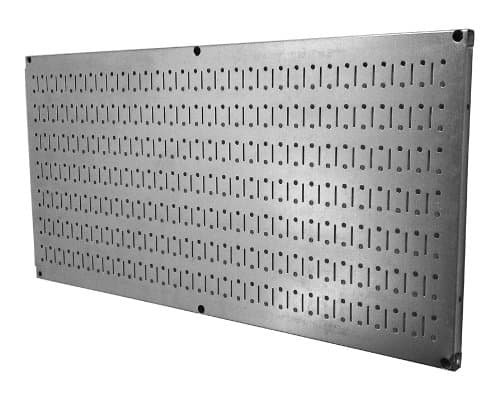 For the awkward shapes Wall Control 16in x 32in Metal Pegboard Panel Steel, and the only system publishing per-hook limits. | Hand tools you want to rearrange often, on any wall | 200 lb / panelInstall doc | |
| 2 | 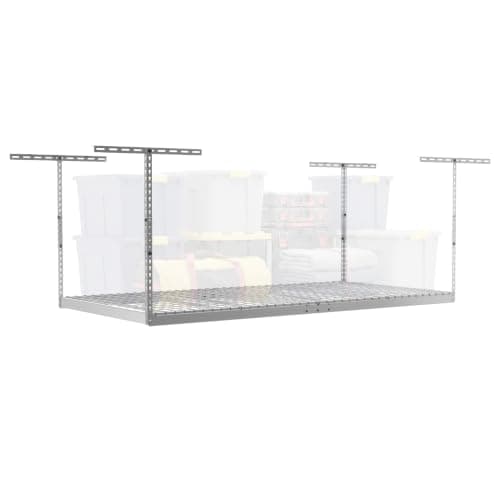 For the seasonal bins SafeRacks 4x8 Overhead Garage Storage Rack Cheapest storage per square foot in the garage. | A conventional wood-framed garage ceiling | 600 lb totalInstall doc | |
| 3 | 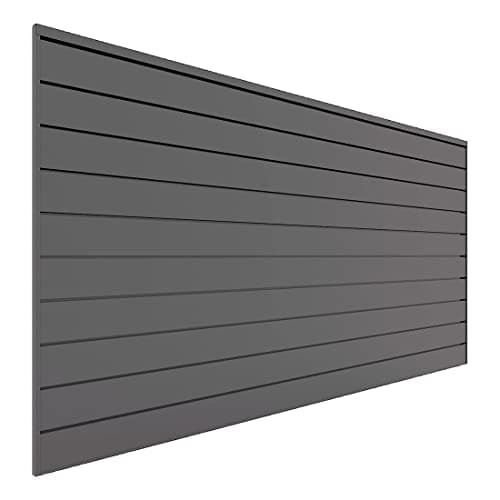 If you want slatwall instead Proslat PVC Slatwall Panels Publishes its fastener spec and stud spacing. | A full wall done once, on a normal stud-framed garage | 75 lb / sq ftInstall doc |
#ad We earn a commission if you buy through this link, at no extra cost to you. How this site is funded. Prices last checked October 16, 2026.
Most garage storage ideas are photographed the day they are finished. The useful test is what they look like a year later, and it separates them sharply.
Ideas that hold up
Get the awkward shapes onto a wall
Rakes, shovels, hoses, extension cords, folding chairs, ladders. None of these sits on a shelf and all of them end up leaning in a corner. Hanging them is the single highest-value move in most garages, and any of the three wall systems does it.
It lasts because there is no alternative resting place competing with it — the hook is genuinely easier than the corner.
One overhead rack for the seasonal bins
Cheapest storage per square foot in the garage, on space nothing else wants. It lasts because the contents are things you touch twice a year, so the ladder friction never becomes an argument.
A shallow shelf at eye level for consumables
Oil, screenwash, spray cans, tape, glue. A shelf eight inches deep at eye level holds all of it in one visible row. Deep shelving buries consumables behind other consumables; shallow shelving cannot.
A dedicated landing surface
Somewhere deliberately set aside for things passing through — the delivery, the item being worked on, the bag from the trunk. Without one, that role is filled by the bench, and then the bench is not a bench.
Clear bins, one or two sizes only
Mismatched containers waste more shelf space than any other single decision. Standardizing makes every shelf fully usable and stackable, and clear bins survive the labels falling off.
Ideas that quietly fail
Popular suggestions assessed on how they hold up over a year of ordinary use.
| The idea | Why it appeals | Why it fails |
|---|---|---|
| Jars screwed to a shelf underside | Looks great, costs nothing | Glass over a workspace, and refilling means unscrewing the jar |
| Ceiling-hung bin tracks | Uses dead space above head height | Bins fatigue and crack; the load is on the bin lip, not the bin |
| Pallets as free wall storage | Free | Unknown load capacity, splinters, and often chemically treated |
| Repurposed kitchen cabinets | Cheap or free after a remodel | Particleboard swells in garage humidity; rated for crockery, not tools |
| Everything behind matching doors | Looks finished | Adds friction to daily items, which then live on the bench instead |
| Filling all four walls | Maximum capacity | Nowhere to move, nowhere for anything new, so the floor fills again |
The one idea worth more than the rest
Store things where you use them, not where they belong by category.
Car fluids near where the car sits. Garden tools near the door you carry them out of. Bike tools near where the bike hangs. It looks less tidy on a plan and works enormously better in practice, because it is the arrangement with the least friction — which, per how to organize a garage, is the only thing that determines whether a system survives.
The bikes are normally the biggest single win, and the hangers and hoists that publish a capacity are in best garage bike storage.
Totes are the default answer for the miscellaneous half of a garage, and the racks that actually fit them are in best shelving for storage totes.
Totes do most of the work in a tidy garage, and the ones whose listings publish a size you can check against your shelf are in best garage storage bins.
Long watercraft is the hardest thing in most garages to put away, and the racks and hoists that publish a capacity for it are in best kayak storage for a garage.
Common questions
What is the best way to store things in a garage?
Can I use old kitchen cabinets in my garage?
Are ceiling-hung bin storage tracks a good idea?
What garage storage ideas should I avoid?
Sources
- Wall Control — published per-hook limits for wall-hung awkward items
- SafeRacks 4x8 — the overhead alternative to ceiling bin tracks
Figures were read on the dates shown against each source. If one has changed, or if we have got something wrong, tell us and we will correct the page.
Read next
- Planning & installHow to organize a garage so it stays that wayWhy organized garages revert within six months, and the allocation rule that prevents it.
- Planning & installLaying out a garage wallZoning by frequency, working around the obstructions every garage has, and the test that prevents expensive mistakes.
- SlatwallSlatwall vs pegboard vs French cleatCost, capacity, install time, accessory lock-in and moisture behavior across all three systems in one table.
- SlatwallBest garage bike storageWall hangers and ceiling hoists ranked on published capacity - and on which listings admit what the wall has to be.
- Racks & shelvingBest shelving for storage totesFive racks measured against the published dimensions of the tote that has to sit on them.
- Racks & shelvingBest garage storage binsSix garage totes ranked on published dimensions and the weight figure only one of them prints.
- SlatwallBest kayak storage for a garageKayak hoists and wall racks ranked on published capacity, the unit it is published in, and the fixing behind it.