How to organize a garage so it stays that way
Everyone manages it once. The interesting question is why it does not last.
#ad We earn a commission if you buy through this link, at no extra cost to you. How this site is funded. Prices last checked October 17, 2026.
Quick picks
The storage this method allocates things to, in the order the sequence below uses them.
| # | Product | Best for | Published rating | Buy |
|---|---|---|---|---|
| 1 | 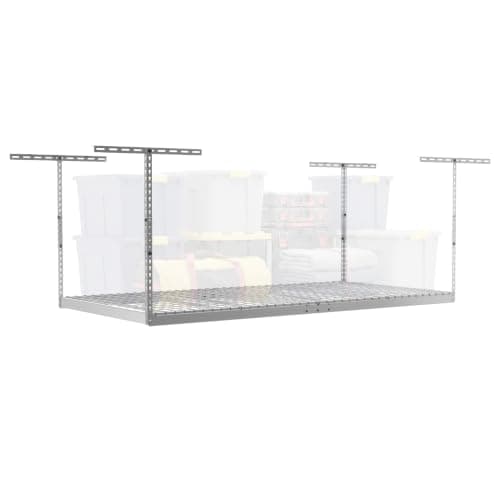 For the twice-a-year pile SafeRacks 4x8 Overhead Garage Storage Rack Overhead, where friction does not matter. | A conventional wood-framed garage ceiling | 600 lb totalInstall doc | |
| 2 | 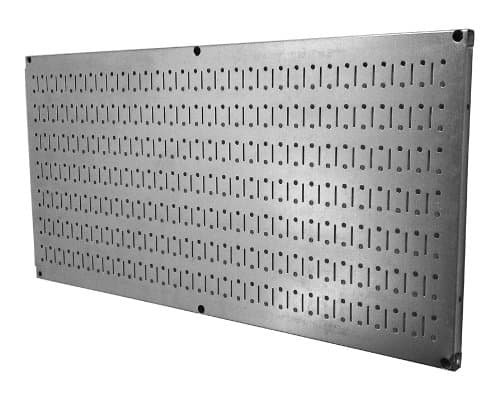 For the prime band Wall Control 16in x 32in Metal Pegboard Panel Weekly items, visible, one movement away. | Hand tools you want to rearrange often, on any wall | 200 lb / panelInstall doc | |
| 3 | 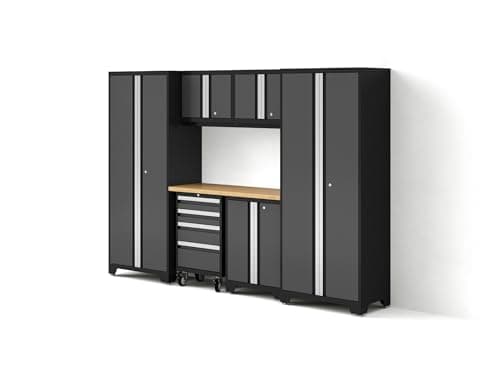 For the monthly pile NewAge Bold Series Garage Cabinet Set Behind a door, at reachable height. | A full wall run where you want published construction specs | 600 lb totalManufacturer |
#ad We earn a commission if you buy through this link, at no extra cost to you. How this site is funded. Prices last checked October 17, 2026.
Why it reverts
Almost everyone organizes their garage successfully at least once. Six months later the floor is filling up again, and the usual explanation — discipline — is wrong. It is a design failure with a predictable cause.
Every act of putting something away has a friction cost. Walking across the garage. Opening a door. Moving something else first. Getting a ladder. If that cost exceeds the cost of putting the item down where you are standing, the item gets put down where you are standing. Every time. Forever.
So an organizing system only survives if the friction of putting things away is lower than the friction of not doing so. That is the whole principle, and everything below follows from it.
3–6 ft
The prime band. Visible without looking up, reachable without moving your feet, no door to open. This is the lowest-friction storage in a garage and it should hold exactly the things you use most — which is not, in most garages, what is actually there.
The sequence that works
- 01
Empty the garage, genuinely
Everything onto the drive on a dry day. You cannot allocate storage to things you cannot see, and half of what is in there has not been looked at since it went in. - 02
Sort by frequency, not by category
Four piles: weekly, monthly, twice a year, and never. Do not sort into “garden”, “tools”, “car” — category sorting produces a tidy garage that reverts, because it ignores the friction cost entirely. - 03
Deal with the never pile now
Sell it, give it away, or dispose of it. Do not put it back. Storing things you do not use is the actual problem in most cluttered garages, and no product on this site fixes it. - 04
Assign the twice-a-year pile to the ceiling
An overhead rack is the cheapest storage per square foot and uses space nothing else competes for. High friction is fine for things you touch twice. - 05
Put the weekly pile in the prime band
Between 3 and 6 feet, on a wall system or open shelving, where it is visible and one movement away. No doors, no reaching, no moving anything else first. - 06
Everything monthly goes in between
Cabinets or shelving at reachable height. A door is acceptable friction for something you want once a month. - 07
Give every item one home, and label it
“Somewhere in the garage” is not a home. If a family member cannot put something back without asking, it will not get put back. Labels are not fussiness; they are what makes the system work for people who did not design it. - 08
Leave 20% empty
A garage packed to capacity has nowhere for the next thing to go, and the next thing goes on the floor. Deliberate slack is what absorbs normal life.
The specific failures worth naming
- Weekly items at eye level with no door in the way
- One obvious labeled home per item
- Standardized bins, so the shelf is fully used
- Deliberate empty space for the next thing
- Sorting by category rather than by frequency
- Everyday tools behind a cabinet door across the garage
- Mixed bin sizes that waste half of every shelf
- Filling every inch, so there is nowhere for anything new
The bin point, which sounds trivial and is not
Mismatched containers are the commonest quiet waste of shelf space in a garage. Three different bin sizes on one shelf leaves gaps you cannot use and a top surface you cannot stack on.
Standardize on one or two sizes before buying shelving — and buy the bins first, because they determine the shelf depth you need. Clear bins beat opaque ones for anything you will not label reliably, which is most things.
Most of the awkward long items end up on hooks, and which hooks publish a weight figure at all is covered in best heavy duty garage hooks.
Long-handled tools are usually what defeats a tidy garage, and the racks built for them are compared in best garden tool storage racks.
Common questions
Why does my garage keep getting cluttered again?
How should I organize a garage?
What is the first step in organizing a garage?
Should garage storage bins all be the same size?
Sources
- SafeRacks 4x8 — the overhead option for the twice-a-year pile
- Wall Control — prime-band wall storage with published per-hook limits
Figures were read on the dates shown against each source. If one has changed, or if we have got something wrong, tell us and we will correct the page.
Read next
- Planning & installLaying out a garage wallZoning by frequency, working around the obstructions every garage has, and the test that prevents expensive mistakes.
- Planning & installGarage storage ideas that actually lastIdeas assessed on whether they still work a year later, including the popular ones that quietly fail.
- Planning & installAre garage cabinets worth it?The decision, committed to in the first fifty words, and the specific cases where the answer is no.
- Planning & installFrench cleat garage storageHow a cleat wall carries load, what it costs, and the published-rating problem nobody mentions.
- Planning & installGarage storage on a budgetThe cheapest fix for each garage storage problem that still publishes a number, and the order to buy them in.
- SlatwallBest heavy duty garage hooksLadder and utility hooks ranked on published capacity - and on the unit that capacity is published in.
- SlatwallBest garden tool storage racksWall racks for long-handled tools, ranked on the per-hook figure only one brand publishes.