Wall Control metal pegboard
The most honestly documented product in this category, by a distance.
#ad We earn a commission if you buy through this link, at no extra cost to you. How this site is funded. Prices last checked October 18, 2026.
Quick picks
Ranked on published load rating normalized into a common unit, then on how much the manufacturer tells you about what that rating assumes. Tap any row for the full write-up.
| # | Product | Best for | Published rating | Buy |
|---|---|---|---|---|
| 1 | 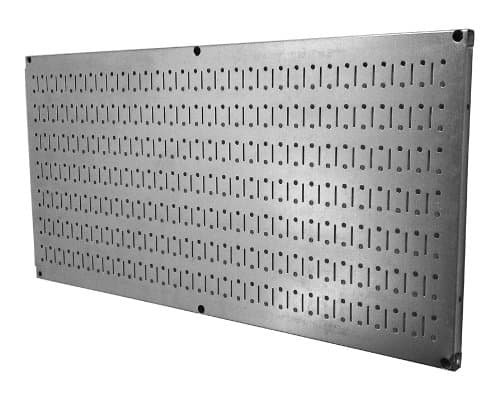 The product reviewed Wall Control 16in x 32in Metal Pegboard Panel 20-gauge steel, 16 x 32 inch panels, ratings published for both mounting methods. | Hand tools you want to rearrange often, on any wall | 200 lb / panelInstall doc | |
| 2 | 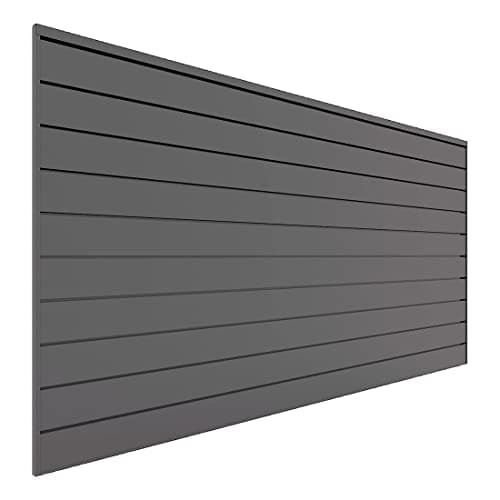 The slatwall alternative Proslat PVC Slatwall Panels If you want a continuous groove rather than a fixed hole grid. | A full wall done once, on a normal stud-framed garage | 75 lb / sq ftInstall doc |
#ad We earn a commission if you buy through this link, at no extra cost to you. How this site is funded. Prices last checked October 18, 2026.
We have not handled this product. What follows is a review of what Wall Control publishes — which, unusually for this category, is enough to review.
What it publishes, and why that is remarkable
Here is the complete set of load figures Wall Control puts on its own how-to page. Read it against anything else in this category:
Wall Control's published load guidance in full. Compare against the manufacturers on the capacity page, most of whom publish a single unqualified number.
| Figure | Published value | Condition |
|---|---|---|
| Per panel, into studs | 200 lb | 16 × 32″ panel |
| Per panel, drywall anchors | 100 lb | Half the stud figure, published as such |
| Per shelf assembly | 10–20 lb | Evenly distributed |
| Per hook, two slots | 10–15 lb | Load at the base of the hook |
| Per hook, one slot | 5–10 lb | Load at the base of the hook |
| Per plastic bin | 2 lb | — |
| Steel gauge | 20 gauge | Published on the product pages |
And alongside those numbers, in writing: “Specific weight capacities depend upon quality of installation, substrate installed into, bracket or hook selection, weight distribution, actual load centers, and a whole host of other variables” — with the stated assumption of “properly installed panels, weight relatively evenly distributed across the panel face, as well as weight situated at the base of each hook or shelf as opposed to the tip.”
That paragraph is the thing this entire site was built to look for, and exactly one manufacturer in the category has written it.
Wall Control 16in x 32in Metal Pegboard Panel
Wall Control · Metal Pegboard Panel
#ad We earn a commission if you buy through this link, at no extra cost to you. How this site is funded. Prices last checked October 18, 2026.
Not slatwall at all, and the most honestly documented product in this entire comparison. Wall Control publishes two capacities for two mounting methods — 100 lb per panel into drywall anchors, 200 lb into studs — plus per-hook and per-shelf limits and a written caveat about what the numbers assume. Everyone else should be doing this.
- Load distance:
- not stated by the manufacturer, so treat the figure as a flat-against-the-wall number
- Fastening:
- Into studs; 100 lb per panel with drywall anchors instead
Wall Control states the assumption in writing: 'properly installed panels, weight relatively evenly distributed across the panel face, as well as weight situated at the base of each hook or shelf as opposed to the tip.' Per-hook limits are published too: 10-15 lb for a hook engaging two slots, 5-10 lb for one slot.
- Published rating
- 200 lb / panelInstall doc
- Dimensions
- 16" x 32" panelManufacturer
- Steel gauge
- 20 gauge steelManufacturer
- Thickness
- Not published
- Material
- Not published
- Coverage
- Not published
- Warranty
- Not published
- Publishes a different rating for drywall anchors and for studs — nobody else does
- Publishes per-hook, per-shelf and per-bin limits as well as per-panel
- Steel, so a dropped tool does not gouge it the way it gouges PVC
- Rated per panel, so comparing it to slatwall needs arithmetic (we do it)
- Hooks engage slots rather than a continuous groove, so placement is less free
The per-hook figures are the ones worth internalizing, because they are the numbers that actually bind. A panel rated 200 lb does not let you hang 200 lb from one hook — a single-slot hook is good for 5 to 10 lb, and a two-slot hook for 10 to 15. That is a cordless drill, not an engine block.
Almost every other manufacturer in this category publishes a panel rating and stays silent on accessories, which leaves the buyer to assume the panel figure is the operative one. It is not, on any system. Wall Control is simply the one telling you.
How it actually compares once normalized
A Wall Control panel is 16 by 32 inches — 3.56 square feet. So its 200 lb into studs is about 56 lb per square foot, and its 100 lb into drywall anchors about 28 lb per square foot.
That places it above Gladiator GearWall (50 lb/sq ft) and below Proslat PVC (75 lb/sq ft) when fixed to studs. Mid-pack. It is not a capacity champion and does not claim to be.
What the normalization also shows is the cost of a bad fixing, stated by the manufacturer rather than inferred: going from studs to drywall anchors halves the capacity. Every other system in this category has the same physics and only this one prints it.
What it is good and bad at
- Two panel ratings for two mounting methods — unique in this category
- Per-hook, per-shelf and per-bin limits published
- 20-gauge steel, so a dropped tool dents rather than gouges
- Standard-grid pegboard accessories are widely available and cheap
- Hooks locate on a fixed grid, not a continuous groove
- 56 lb/sq ft normalized is mid-pack, not class-leading
- Panels are small at 16 x 32 inches — a big wall is a lot of panels
- Powder-coated steel can corrode from a deep scratch in a damp garage
Who should buy it
Anyone hanging hand tools who wants to know what they are getting. The capacity is more than adequate for that job, the accessory ecosystem is large and cheap, and the documentation means you can plan a wall rather than hope.
Who should not: anyone hanging awkward widths that want hooks placed freely along a run rather than on a one-inch grid, and anyone putting real shelf loads on the wall — a 10 to 20 lb shelf assembly limit is modest, and storeWALL Heavy Duty at 165 lb four inches out is a different class of product for that job.
Wall Control against the polypropylene and hardboard alternatives, ranked on what each publishes per square foot, is in best pegboard for a garage.
Wall Control's own hooks are not the only option, and the aftermarket kits that fit its boards are compared in best pegboard hooks.
Common questions
How much weight can Wall Control pegboard hold?
What gauge is Wall Control pegboard?
Is Wall Control better than slatwall?
Sources
- Wall Control pegboard how-to and FAQ — all published load figures and stated assumptions
- Wall Control metal pegboard panel — 20 gauge steel, 16 x 32 inch
Figures were read on the dates shown against each source. If one has changed, or if we have got something wrong, tell us and we will correct the page.
Read next
- SlatwallSlatwall vs pegboard vs French cleatCost, capacity, install time, accessory lock-in and moisture behavior across all three systems in one table.
- SlatwallThe best garage wall systemsNine wall systems ranked on normalized load rating and on how honestly each manufacturer documents it.
- SlatwallHow much weight can slatwall actually hold?The full cross-brand load table, normalized into one unit, with what each rating assumes stated beside it.
- SlatwallBest pegboard for a garageMetal, polypropylene and hardboard pegboard ranked on the published figure, including the one that publishes none.
- SlatwallBest pegboard hooksFive pegboard hook kits ranked on board fit and peg locks - and one capacity claim no panel can support.