Flow Wall vs Proslat
A higher published rating and masonry support, against a warranty ten times longer.
#ad We earn a commission if you buy through this link, at no extra cost to you. How this site is funded. Prices last checked October 17, 2026.
Quick picks
Ranked on published load rating normalized into a common unit, then on how much the manufacturer tells you about what that rating assumes. Tap any row for the full write-up.
| # | Product | Best for | Published rating | Buy |
|---|---|---|---|---|
| 1 | No photo Best on masonry Flow Wall Wall Panel Pack Names cinder block, cement and brick on the product page. 100 lb/sq ft. | Garages with a block or poured-concrete wall to cover | 100 lb / sq ftManufacturer | |
| 2 | 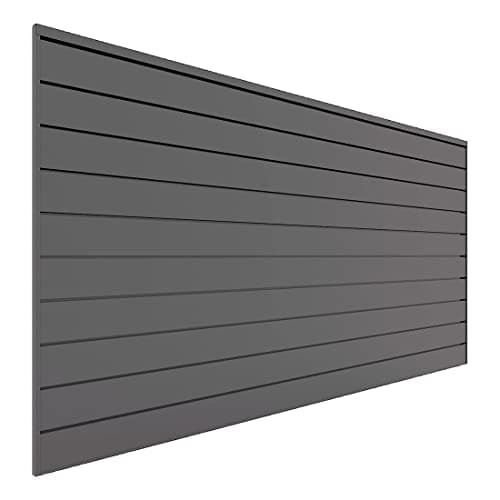 Best on studs Proslat PVC Slatwall Panels Lifetime panel warranty against one year, and a published fastener spec. | A full wall done once, on a normal stud-framed garage | 75 lb / sq ftInstall doc |
#ad We earn a commission if you buy through this link, at no extra cost to you. How this site is funded. Prices last checked October 17, 2026.
Published figures from each manufacturer's product pages, read 2 September 2026.
| Flow Wall | Proslat PVC | |
|---|---|---|
| Published rating | 100 lb/sq ft | 75 lb/sq ft |
| Substrates named | Cinder block, cement, brick, studs | Studs at 16″ spacing |
| Warranty | 1 year | Lifetime (panels) |
| Panel size | 48 × 12 × 0.75″ | 8 × 4 ft sections |
| Material | Cellular PVC | High-density PVC |
| Fixings included | 48 screws, 12 dowels, 12 finish strips | Trims and mounting screws included |
| Load distance published | Not published | Not published |
The masonry point is the real one
Almost every load rating in this category quietly assumes a wood stud wall. Flow Wall is the exception: its product page states installation to “cinder block, cement, brick walls or studs”, and it ships dowels alongside the screws, which is what you need for a masonry fixing.
That matters because a large share of US garages have at least one masonry wall — a shared wall with the house, a below-grade wall, or in some regions the entire envelope. Buying a system whose documentation only contemplates studs, and then improvising the fixing, is how people end up with a wall they do not trust.
The warranty gap is the counterweight
One year against lifetime is not a detail. A warranty is, among other things, the manufacturer’s own estimate of how long the product will survive normal use, and a factor-of-ten difference on a product that gets screwed to a wall and left there is a real signal.
For context in the same category: storeWALL publishes ten years and Trusscore twenty with lifetime on registration. Flow Wall’s single year is the shortest we found anywhere in this comparison, and it is worth weighing against the 33% higher headline rating.
The verdict
Masonry wall: Flow Wall. It is the system that contemplates your wall, ships the right fixings, and does not require you to guess. The short warranty is the price of that.
Stud wall: Proslat. The lifetime panel warranty, the published fastener spec and the larger sections make it the better long buy, and 75 against 100 lb per square foot is a difference neither of you will ever notice on a wall of hand tools.
Either way, neither publishes a load distance, so if the plan involves brackets, read the capacity page and derate accordingly — or buy the one system in the category that does publish it.
Common questions
Can Flow Wall be installed on concrete block?
How long is the Flow Wall warranty?
Is Flow Wall stronger than Proslat?
Sources
- Flow Wall 24 sq ft panel pack — rating, substrates, contents, warranty
- Proslat FAQ — rating, fastener spec, stud spacing
Figures were read on the dates shown against each source. If one has changed, or if we have got something wrong, tell us and we will correct the page.
Read next
- SlatwallThe best garage wall systemsNine wall systems ranked on normalized load rating and on how honestly each manufacturer documents it.
- SlatwallProslat vs storeWALLTwo PVC systems compared on rating, thickness, warranty and what the installed cost actually includes.
- Planning & installMounting into drywall, studs and masonryThe substrate case nobody else covers: what happens to a published rating when the wall is block rather than studs.
- SlatwallGladiator wall systemsGearWall against GearTrack in one unit, and why the cheaper-looking half of the range is the stronger one.